


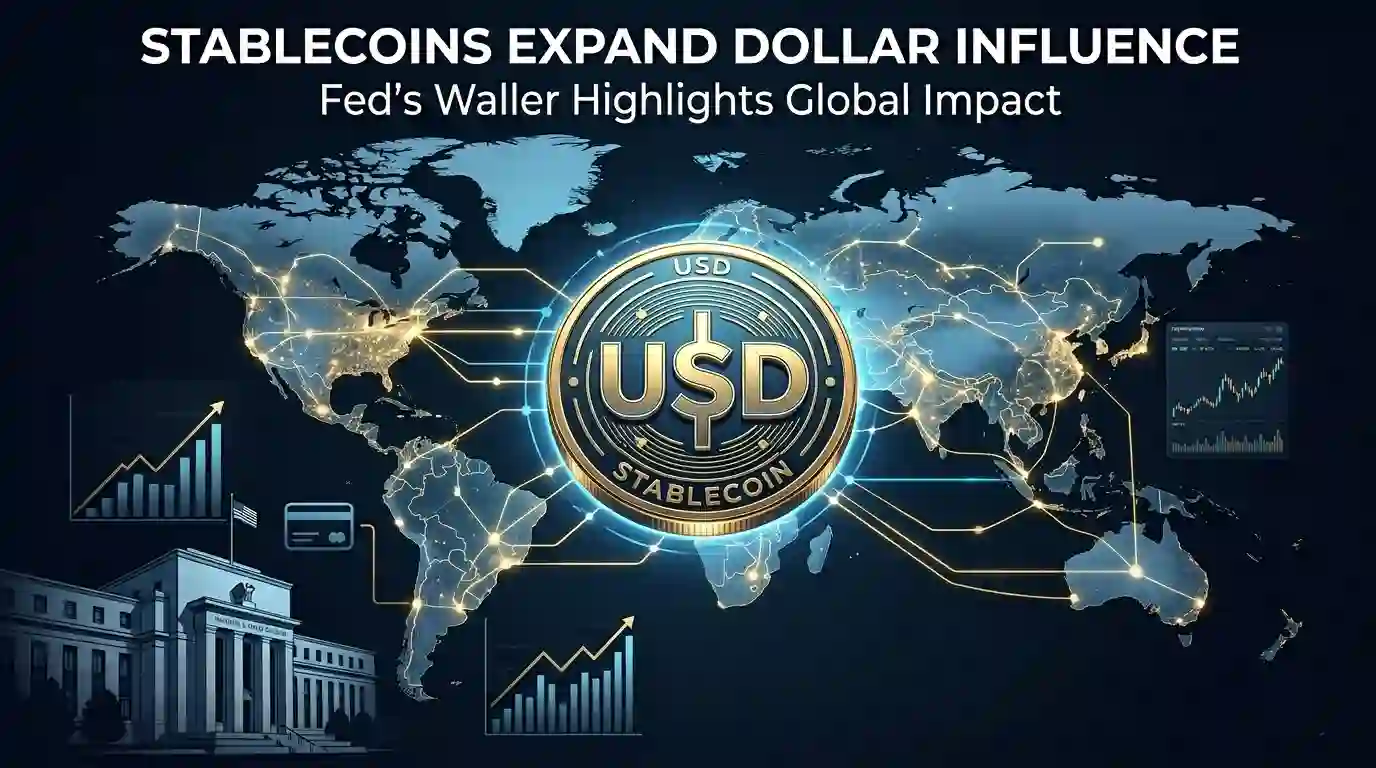
Fed’s Waller Says Dollar-Backed Stablecoins Could Expand U.S. Monetary Policy Reach
Dollar-backed stablecoins could play a much larger role in the global financial system than many policymakers initially expected, according to U.S. Federal Reserve Governor Christopher Waller.
Speaking at the 32nd Dubrovnik Economics Conference in Croatia, Waller suggested that the growing adoption of dollar-backed stablecoins around the world may strengthen the influence of U.S. monetary policy beyond American borders. His remarks come as lawmakers in Washington continue debating stablecoin regulations and the future of digital assets in the United States.
Dollar-Backed Stablecoins Could Increase Global Dollar Influence
Waller argued that countries increasingly using dollar-backed stablecoins may effectively import U.S. monetary conditions alongside the digital assets themselves.
Stablecoins are cryptocurrencies designed to maintain a stable value by being pegged to traditional assets such as the U.S. dollar. In recent years, they have become a crucial part of the digital asset ecosystem, facilitating trading, payments, remittances, and decentralized finance transactions.
As stablecoin adoption grows internationally, Waller believes their influence could extend beyond crypto markets and impact broader economic activity.
Rather than viewing stablecoins as a threat, the Federal Reserve governor described them primarily as payment innovations that can introduce greater competition into the financial system.
His comments represent one of the more supportive views on stablecoins from a senior U.S. central bank official.
Stablecoin Regulation Remains a Key Debate
The discussion around dollar-backed stablecoins comes at a critical moment for the U.S. crypto industry.
Lawmakers are currently working through multiple pieces of digital asset legislation, including efforts to establish clearer rules for stablecoin issuers and cryptocurrency platforms.
One of the biggest points of disagreement involves whether stablecoin companies should be permitted to offer yield-bearing products to users. These debates have slowed progress on broader crypto legislation, including market structure reforms that many industry participants view as essential for long-term growth.
Supporters argue that clear regulations could help the United States maintain its leadership position in digital finance, while critics continue raising concerns about consumer protection and financial stability.
Bank of England Offers a Different Perspective
Not everyone at the conference shared Waller’s optimism regarding stablecoins.
Bank of England policymaker Megan Greene suggested that tokenized bank deposits could eventually become more popular than stablecoins as digital payment technologies evolve.
Greene compared various forms of digital money—including central bank digital currencies (CBDCs), stablecoins, and tokenized deposits—to competitors in a race. While she acknowledged that all three could coexist, she argued that tokenized deposits may ultimately emerge as the preferred solution for many financial institutions.
Her view highlights an ongoing debate among policymakers about which form of digital money will dominate the future financial landscape.
Central Banks Remain Divided on Digital Currency
The discussion also revealed differing opinions regarding central bank digital currencies.
Waller has long been a critic of CBDCs and suggested that enthusiasm among central banks has cooled compared to previous years. However, Greene disagreed with the notion that interest in government-backed digital currencies is fading.
The debate reflects broader uncertainty within the global financial system as regulators attempt to balance innovation with financial stability.
While some policymakers see stablecoins as a valuable payment technology, others remain concerned about potential risks associated with widespread adoption.
UK Regulators Reviewing Stablecoin Rules
Meanwhile, UK regulators are reportedly reconsidering parts of their proposed stablecoin framework.
Officials at the Bank of England are reviewing previous proposals that would have imposed reserve requirements and ownership limits on stablecoin users. Industry participants argued that some of the proposed restrictions could make pound-backed stablecoins less practical for large-scale adoption.
The review highlights how regulatory approaches continue to evolve as governments attempt to accommodate growing interest in digital assets while managing potential risks.
Financial stability remains a key concern for policymakers. Some regulators worry that large-scale use of dollar-backed stablecoins could create redemption pressures during periods of market stress, particularly in countries where the assets become widely used.
Why Dollar-Backed Stablecoins Matter
The rapid growth of dollar-backed stablecoins has transformed them from niche crypto products into important components of the digital economy.
Today, stablecoins are used for international payments, crypto trading, decentralized finance applications, and cross-border settlements. Their ability to move value quickly and efficiently has attracted both retail users and institutional investors.
As adoption expands globally, policymakers are increasingly recognizing that stablecoins may influence not only financial markets but also broader economic conditions.
Waller’s comments underscore the growing importance of digital dollars in the modern financial system and suggest that stablecoins could become an unexpected extension of U.S. economic influence abroad.
Final Thoughts
The debate surrounding dollar-backed stablecoins is no longer limited to the cryptocurrency industry. It has become a significant policy issue for central banks, regulators, and governments around the world.
While Christopher Waller sees stablecoins as a tool that could strengthen the international reach of U.S. monetary policy, other policymakers remain cautious about their long-term impact.
As lawmakers continue shaping stablecoin regulations and adoption accelerates worldwide, the role of dollar-backed stablecoins in the global financial system is likely to remain one of the most closely watched developments in digital finance.